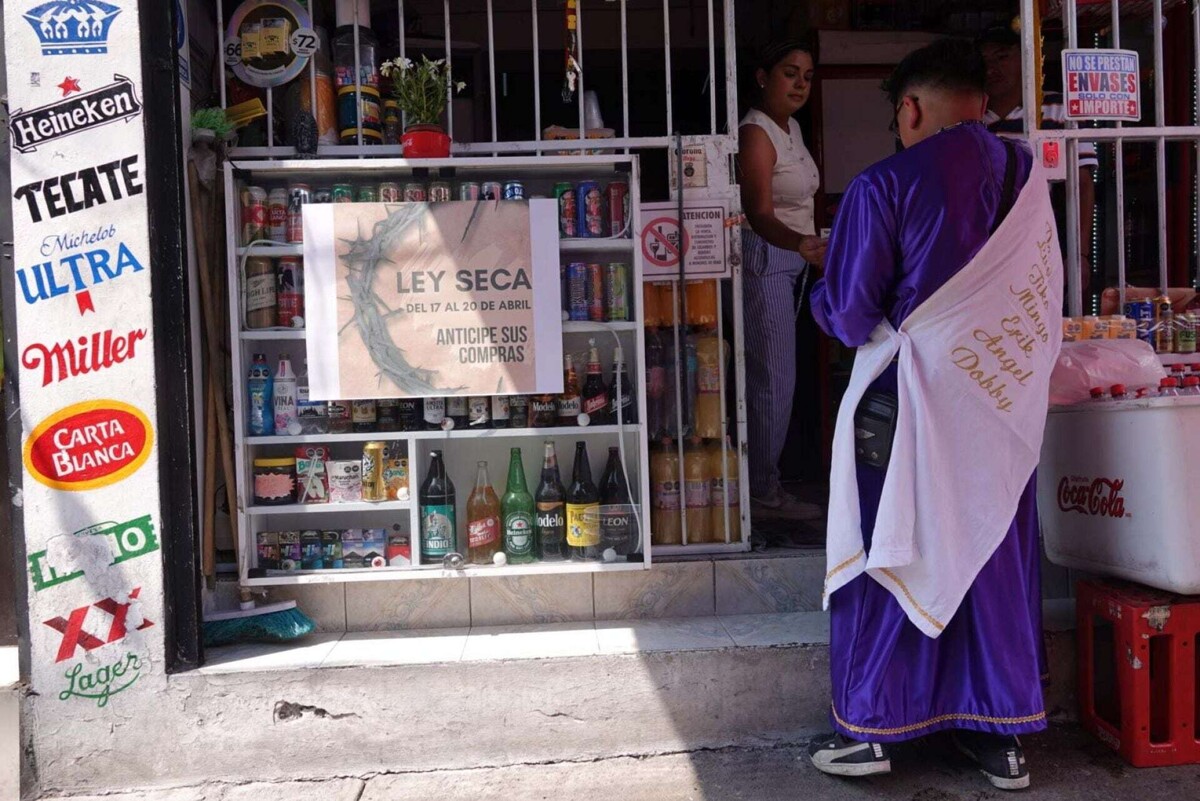
Mexico City will implement a dry law in various communities for the 2026 Holy Week celebrations, one of the seasons with the highest concentration of people in the demarcation. According to the notice published in the Official Gazette of the capital, the restriction will be in effect on Thursday, April 2, and Friday, April 3, from 00:00 to 23:59, a period during which high attendance is expected for religious activities. Why will there be a dry law? The measure will be implemented in the Cuajimalpa, Magdalena Contreras, Milpa Alta, and Iztapalapa mayoralties due to the representation of the Procession of the Passion of Christ, a tradition recognized as Intangible Cultural Heritage of Humanity, which gathers thousands of attendees each year. Neighborhoods where the prohibition will apply. The sale and consumption of alcoholic beverages will be prohibited in the following eight neighborhoods of Iztapalapa: San Ignacio, Santa Bárbara, La Asunción, San Lucas, San Pedro, San Miguel, San Pablo, San José. Are there exceptions? Yes. The agreement states that commercial establishments of zonal and neighborhood impact that sell prepared foods may offer alcoholic beverages only for takeout and within the hours authorized in their permit. Fines for violating the dry law. Penalties for those who do not respect the measure can be elevated: Consumers in public places: Fine of 21 to 30 UMA (between 2,375 and 3,394 pesos) Arrest of 25 to 36 hours Or community service of 12 to 18 hours Commercial establishments: Fines of 351 to 2,500 UMA (from 39,712 to over 282,000 pesos) Temporary closure of the business. The authorities urged the population to respect the provisions to guarantee safety and order during the religious celebrations in the demarcation.